

An Elastic IP gives your AWS instance a stable public address. For streaming workflows, that matters because dashboard access, ingest endpoints, callbacks, DNS, and operational runbooks all become harder when the server IP changes after a stop and start cycle.
This page shows the practical AWS path: allocate the Elastic IP, associate it with the instance, and verify that your Callaba or streaming environment now has a public address you can rely on. If this is your first AWS launch, start with Callaba Cloud on AWS. If your instance is up but still not reachable, continue with security group troubleshooting.
When you should use an Elastic IP
- you need a stable address for the dashboard or API callbacks
- you do not want the public IP to change after instance restart
- you want to point DNS, monitoring, or partner integrations to one reliable address
If the instance is only a temporary test node, a changing public IP may be acceptable. For anything more persistent, a stable address is usually the better choice.
Step 1. Open the AWS EC2 console
Go to the AWS Console, open EC2, and stay inside the same region where the instance is running.
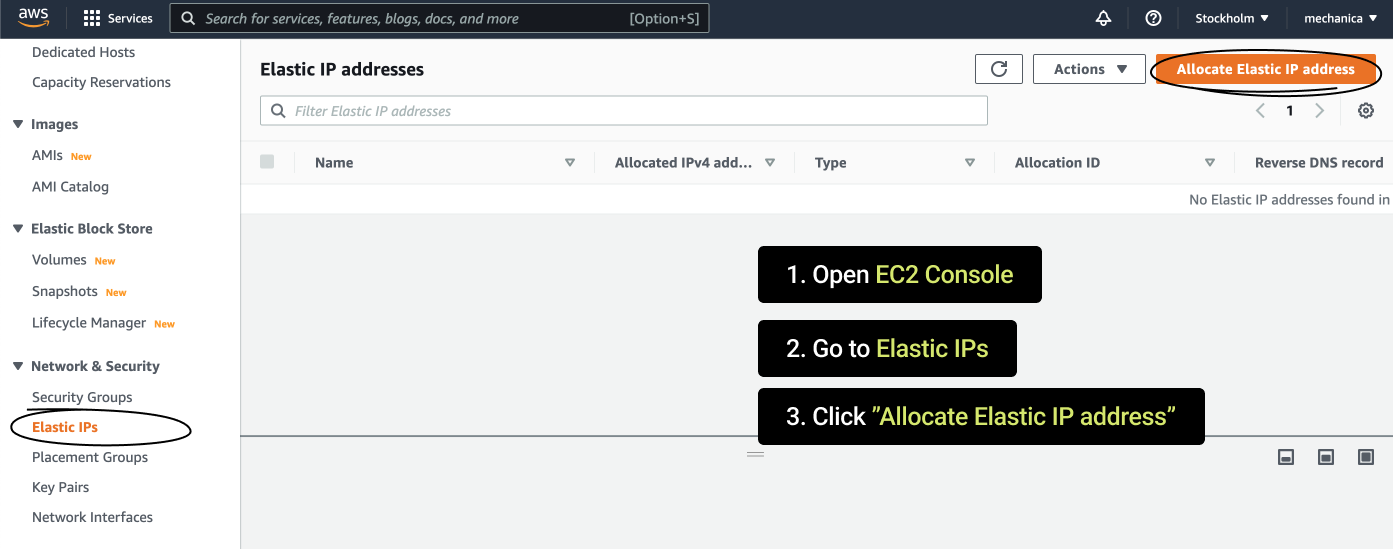
Step 2. Open the Elastic IP section
In the EC2 navigation, open the Elastic IP area. This is where AWS lets you allocate a reusable public address and later associate it with an instance.
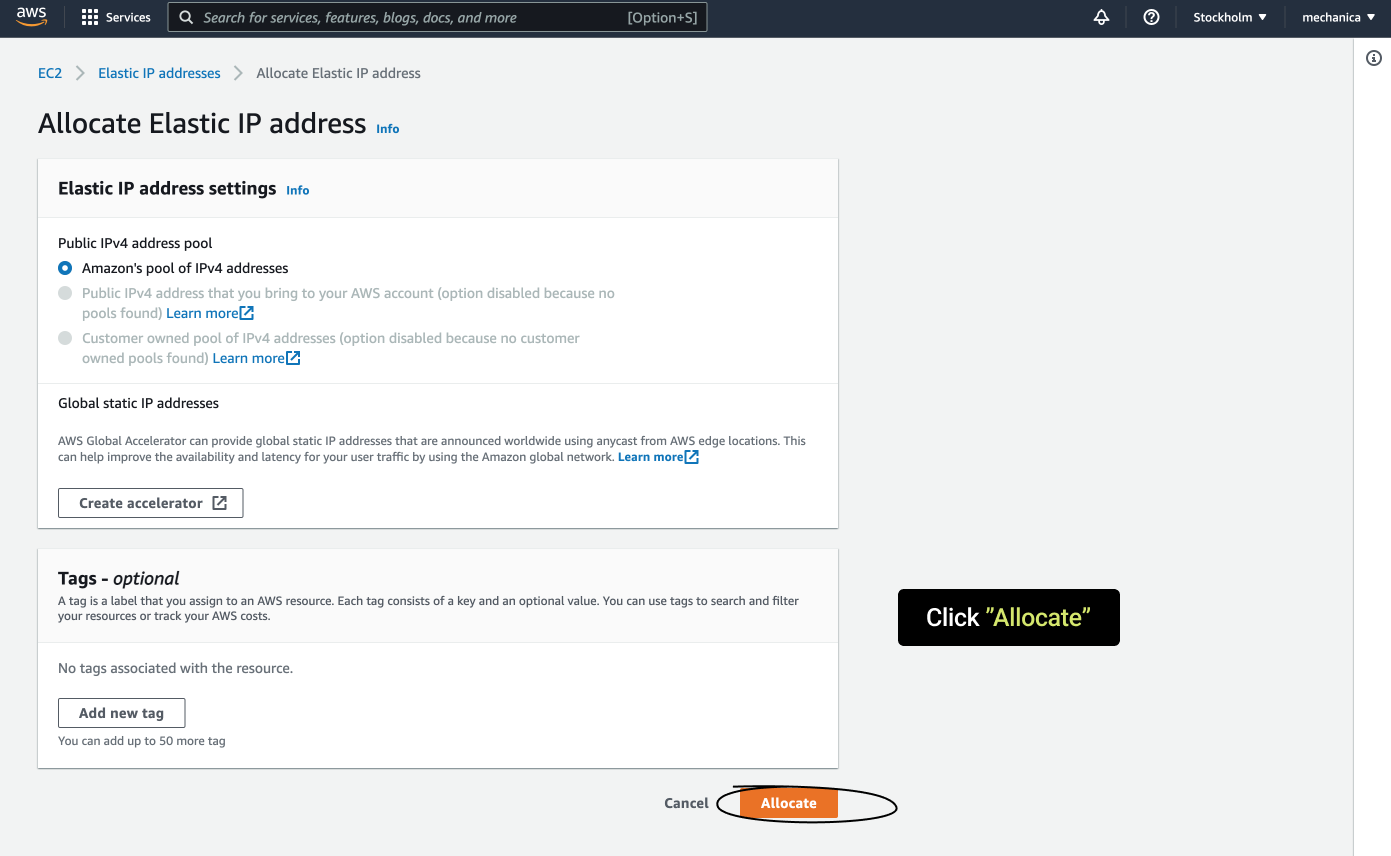
Step 3. Allocate a new Elastic IP
Create a new Elastic IP from AWS. In most cases the default allocation flow is enough unless your account has a special networking policy.
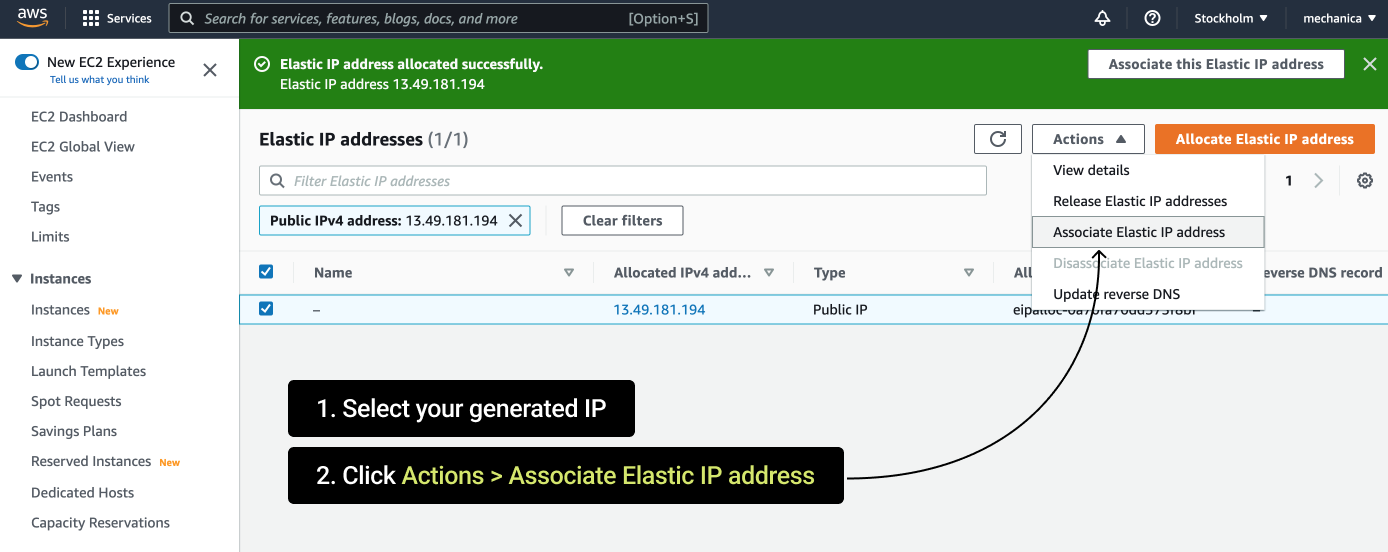
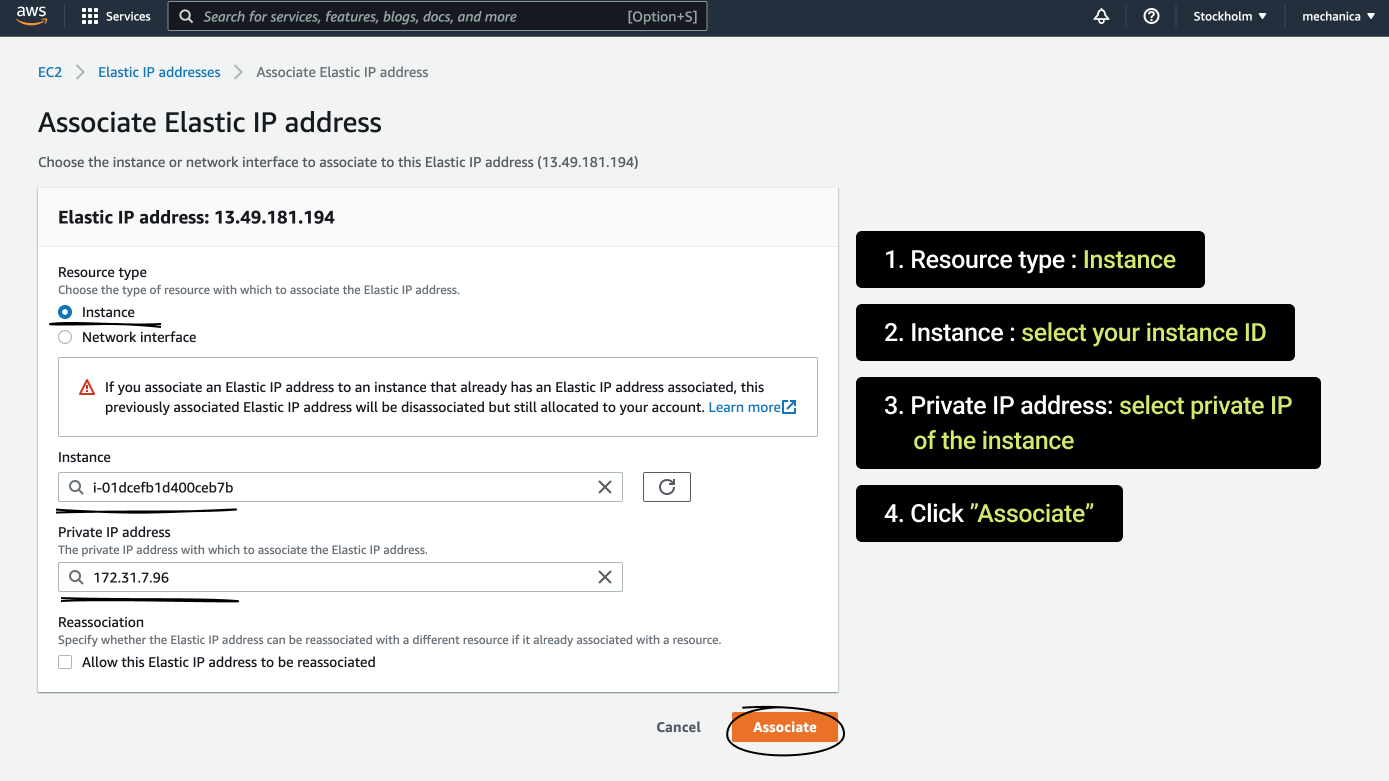
Step 4. Associate the Elastic IP with your instance
After allocation, choose the Elastic IP and associate it with the EC2 instance that runs Callaba or your streaming workload.
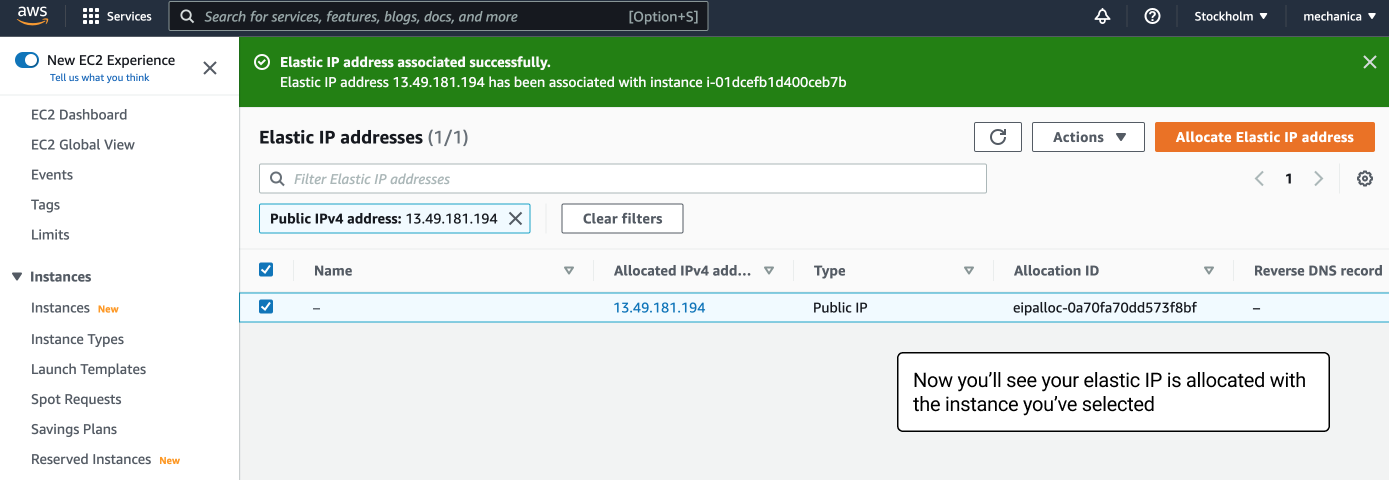
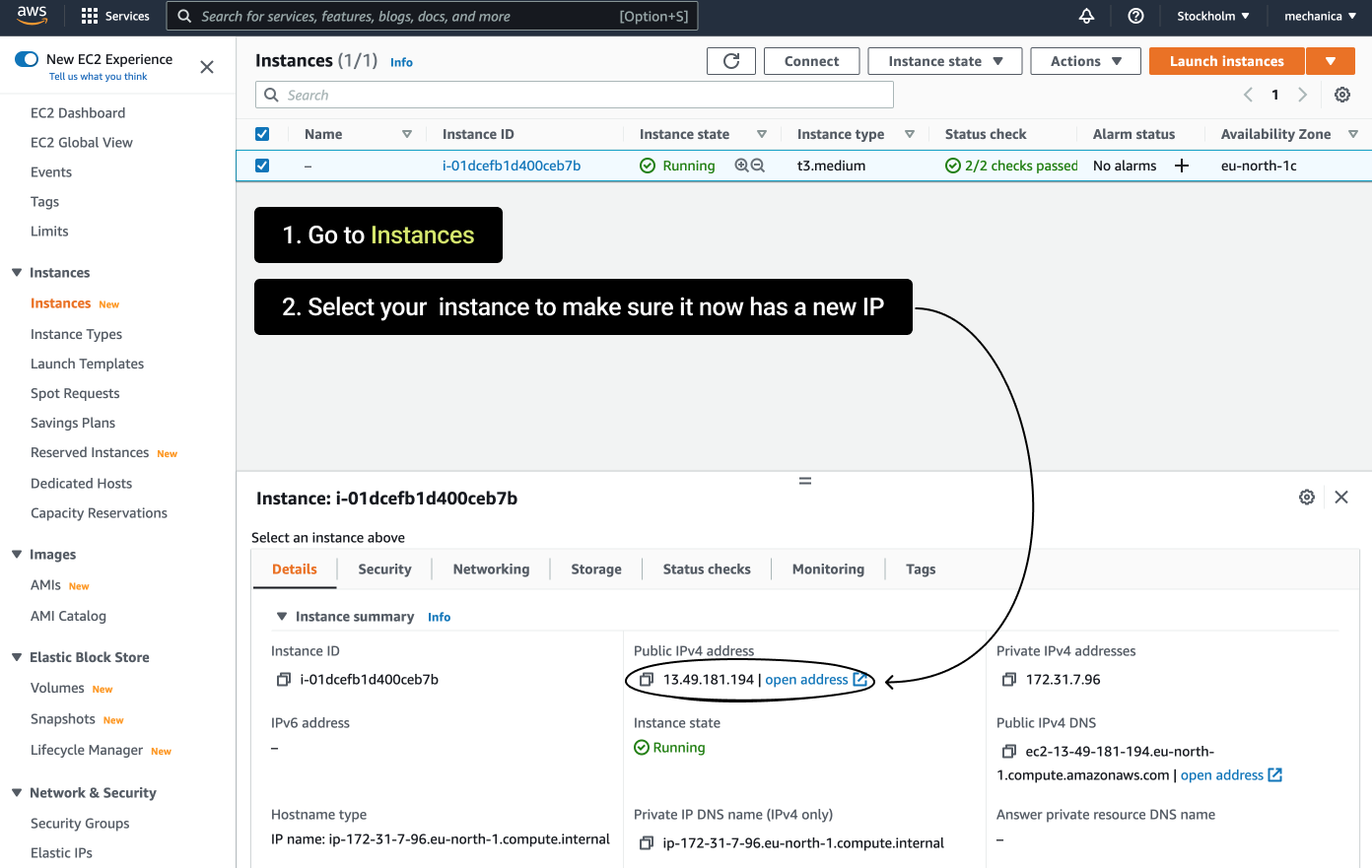
Step 5. Update the server settings if your workflow depends on the public address
If your dashboard, player callback, integrations, or route settings use a public address explicitly, update them so the system points to the new stable IP rather than to the temporary one.

Step 6. Verify that the instance is reachable
Open the new public address in the browser and confirm that the dashboard or relevant endpoint responds correctly.


What usually goes wrong
- the Elastic IP is allocated in the wrong region
- the IP is allocated but not associated to the right instance
- security groups still block access even though the IP is stable
- the application still points to the old public address internally
If the new address exists but the dashboard still does not open, the next page to check is security group troubleshooting on AWS.
Final practical rule
Use an Elastic IP when the streaming environment needs a public address that survives restarts. It is a small infrastructure step, but it removes a surprising amount of operational friction from dashboard access, DNS, integrations, and day-to-day support.
Allocate and associate an AWS Elastic IP deliberately
An Elastic IP is a public IPv4 address allocated to an AWS account and then associated with a supported AWS resource, such as an EC2 instance or network interface. In the EC2 console, allocate the address under Elastic IPs, then select it and use the association action for the intended instance or network interface. AWS requires the address and associated resource to be compatible with the same network border group; consult AWS’s current Elastic IP guidance for the current console and CLI options.
After association, verify the allocation and association IDs in AWS, confirm the expected public address resolves or responds from an authorised external test, and check the instance security group, network ACL, route, and application listener separately. An allocated address is not automatically reachable, and releasing it returns it to the pool. Keep the association in place and retest after a planned instance change; a stable public endpoint depends on the correct resource association as well as the surrounding network configuration.
