
Machine identity and discovery
Set the NDI machine name and reachable discovery-server addresses in dedicated fields.
Callaba gives operators a visible NDI control layer for machine identity, discovery servers, network interfaces, configuration, adapters, Multiview, and downstream delivery. Use NDI inside the network boundary where it fits, and use a reviewed SRT path when media must cross an unpredictable WAN.
The dashboard keeps discovery and routing decisions visible; network design, bandwidth, firewall rules, and source compatibility still need to be validated in the real environment.
The normal path stays in the authenticated Callaba UI. Advanced automation is available after the network and product workflow have been proven.
Set the NDI machine name and reachable discovery-server addresses in dedicated fields.
Choose the explicit source IP addresses Callaba should bind instead of relying on an unknown host default.
Import reviewed JSON or text configuration, inspect it in the built-in editor, and save it from the dashboard.
Inspect discovered devices, create the required adapter, start it, and verify its runtime state.
Dashboard authentication and API tokens control who changes Callaba settings. NDI groups do not replace network ACLs, segmentation, encryption, or firewall policy.
Supported behavior sits beside a practical acceptance check. The installed Callaba interface and the real source, destination, and infrastructure profile remain authoritative.
| Capability | Supported behavior | Acceptance check |
|---|---|---|
| Machine identity and discovery | Set the NDI machine name and reachable discovery-server addresses in dedicated fields. | Yes. Machine identity, discovery servers, interface addresses, configuration import, and the live editor are available in the dashboard. |
| Network interface addresses | Choose the explicit source IP addresses Callaba should bind instead of relying on an unknown host default. | The dashboard keeps discovery and routing decisions visible; network design, bandwidth, firewall rules, and source compatibility still need to be validated in the real environment. |
| Configuration import and live editor | Import reviewed JSON or text configuration, inspect it in the built-in editor, and save it from the dashboard. | Yes. Machine identity, discovery servers, interface addresses, configuration import, and the live editor are available in the dashboard. |
| Discovered sources and adapters | Inspect discovered devices, create the required adapter, start it, and verify its runtime state. | Start with one discovered source, verify it in Multiview, publish the required output, and only then add more adapters or API automation. |
| Access boundary | Dashboard authentication and API tokens control who changes Callaba settings. NDI groups do not replace network ACLs, segmentation, encryption, or firewall policy. | Callaba dashboard authentication and API tokens protect the product controls. Keep network ACLs and segmentation in place as a separate security layer. |
| One controlled boundary from source discovery to production output | The dashboard keeps discovery and routing decisions visible; network design, bandwidth, firewall rules, and source compatibility still need to be validated in the real environment. | No. Keep NDI discovery inside a designed network boundary. Use a WAN-suitable contribution path such as reviewed SRT when media must cross sites or public networks. |
You have seen what the product does. These three guides take you into the exact controls, show what to connect next, and give you a practical check before the workflow goes live.
Use the released recipes to update configuration, inspect discovery, and publish an adapter. Keep operator approval and network policy outside the payload.
Yes. Machine identity, discovery servers, interface addresses, configuration import, and the live editor are available in the dashboard.
No. Keep NDI discovery inside a designed network boundary. Use a WAN-suitable contribution path such as reviewed SRT when media must cross sites or public networks.
Callaba dashboard authentication and API tokens protect the product controls. Keep network ACLs and segmentation in place as a separate security layer.
Yes. Choose cloud or Linux deployment based on network proximity, infrastructure ownership, storage, and operating requirements, then validate the same real sources.
Start with one discovered source, verify it in Multiview, publish the required output, and only then add more adapters or API automation.
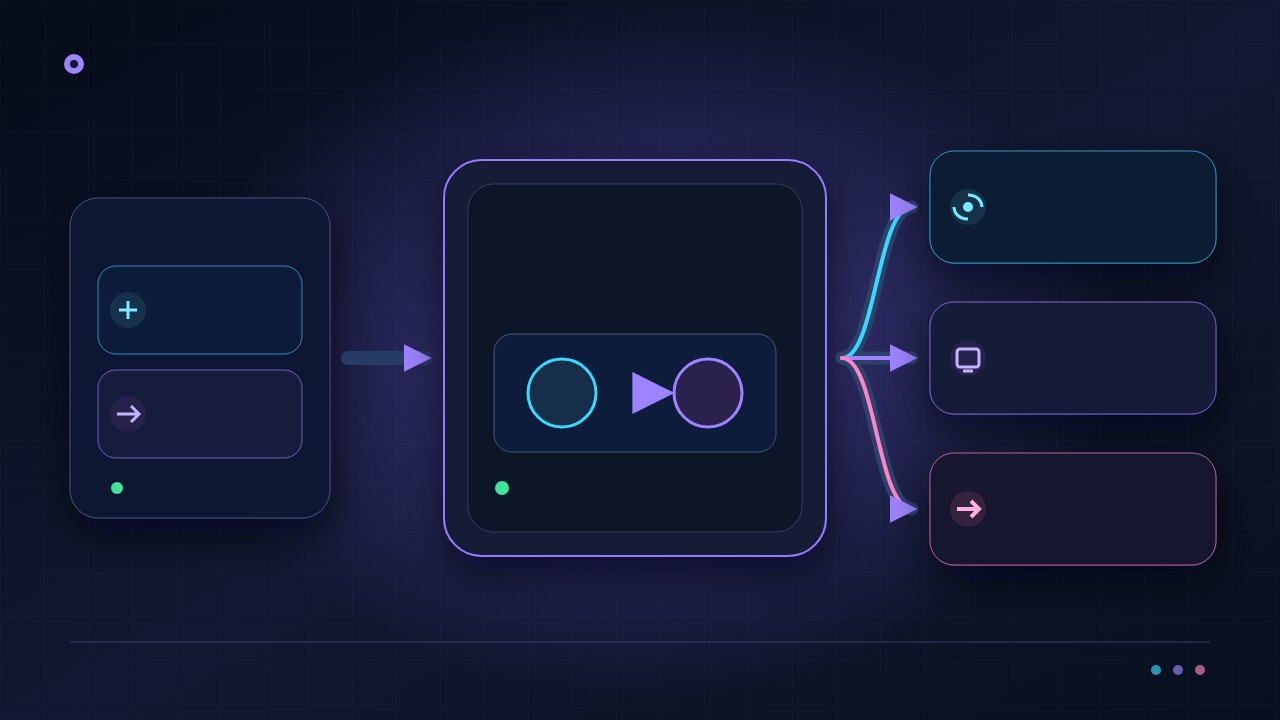
NDI feels effortless when every sender, receiver and operator shares a network built for media. Once discovery crosses subnets or several full-bandwidth feeds share a switch, automatic discovery is only the beginning of the design.
Known switches, addressing, discovery and bandwidth
SRT, RTMP or a deliberately engineered NDI path
NDI Discovered Devices shows the sources this Callaba host can see. NDI Adapters connect those sources to Callaba workflows. NDI Configuration stores the machine name, Discovery Server addresses, explicit source IPs and advanced settings.
After you can see and hear the intended source, place it in Multiview, send it to Recording, or attach a restream or conversion job. These jobs reuse the verified source; they do not turn discovery into proof that every output works.
On a production LAN, NDI can carry picture, audio and metadata between cameras, switchers, graphics systems and software without a baseband cable for every route. That convenience still depends on reachability, predictable discovery, switches that can carry the traffic and receivers with enough sustained capacity.
Draw the actual path from sender to receiver. Mark every VLAN and routed boundary, estimate the number of simultaneous feeds and note whether the deployment uses full-bandwidth NDI, an HX variant or both. A long source list does not tell you how much traffic a receiver will request after it connects.
Automatic discovery works well when senders and receivers share a suitable LAN. It becomes harder to diagnose when sources appear across unintended segments or multicast behavior changes between switches.
NDI documents the Discovery Server as a central source registry. Configured senders can avoid mDNS, which is useful across subnets and in cloud networks where multicast may be unavailable or undesirable.
A Discovery Server lists sources; it does not carry the media on their behalf. The sender and receiver still need a reachable path with enough capacity. Keep the registry address, groups and explicit source IPs beside the network diagram so another operator can explain why a source is visible.
NDI is designed for production networks, not as a promise that an arbitrary public route will behave like a studio LAN. For a remote venue, decide where NDI ends and the contribution transport begins. That crossing might use SRT for recovery over an unpredictable path, RTMP for a compatible publisher, or a deliberately engineered NDI bridge.
Camera, programme, clean feed or return; include the machine and programme identity.
Confirm discovery, the switch path, actual rate and the expected receiver count.
Write down codec, transport, latency, authentication and who owns the remote endpoint.
Check current picture, every required audio channel, sync and recovery after a disconnect.
Do not transcode by habit. Preserve the source when the receiving workflow can use it directly. Add a separate transcoding output only when the next system requires a different codec, resolution, frame rate or audio layout.
Open the feed on the surface the operator will use. Watch representative motion, listen to every required audio channel, check lip sync, colour, frame rate and source identity, then disconnect the sender long enough to exercise the expected recovery behavior.
A similarly named source can be selected successfully. Verify both machine name and programme identity.
Video can pass while the intended audio pair or channel mapping does not. Listen instead of inferring audio from another meter.
One feed cannot certify a switch carrying the full show. Repeat with the expected concurrent source count.
A replacement switch port, VLAN rule or Discovery Server address can change visibility without touching the production application.
Change one realistic condition: move a sender to its production switch port, restart the Discovery Server or interrupt the remote transport. Record which source disappeared, what the receiver reported and how long it took to restore picture and audio. A network diagram is useful when it predicts that behavior.
NDI is a network video technology: it sends video, audio, and related metadata between compatible devices and applications over an IP network. The name comes from Network Device Interface. In a typical workflow, one NDI sender advertises a source on the local network and an NDI receiver selects that source.
NDI is a transport and discovery workflow, not a guarantee that every device can see every source. Check that sender and receiver are compatible, on the intended network path, and that bandwidth, multicast, firewall, and timing choices suit the installation.
NDI is a networked-video technology used to move low-latency video, audio, and metadata between compatible production systems over IP. It is commonly used inside a managed production LAN, where sources, switchers, graphics systems, and receivers can discover or be configured to reach one another.
Discovery and reachability are separate concerns. A source may use discovery, an explicit IP address, a discovery server, or an adapter depending on the network design; crossing a WAN needs a deliberate, tested path rather than an assumption that local discovery will work. Callaba provides reviewed NDI configuration, discovery, and adapter controls for compatible workflows, not universal interoperability for every NDI device or network.
Primary references: NDI Discovery Server documentation and NDI-FIND discovery documentation.