What Does SRT Stand For? Secure Reliable Transport and the Role of the SRT Protocol
SRT stands for Secure Reliable Transport. In streaming, the SRT protocol is used to carry live video between endpoints over IP networks with better resilience to packet loss, jitter, and unstable internet paths than simpler legacy ingest methods.
The short version: SRT exists to make live contribution feeds more dependable across real-world networks. It is usually the transport path into production or cloud processing, not the format viewers watch directly in a browser.
Quick answer
SRT = Secure Reliable Transport. It is a video transport protocol commonly used for live contribution, backhaul, and relay. Teams choose it when they need to move a feed from an encoder, OBS, venue, or remote site into a cloud or broadcast workflow with recovery behavior that helps under packet loss and jitter.
If you want a deeper protocol overview, see what SRT protocol is.
What SRT protocol actually is
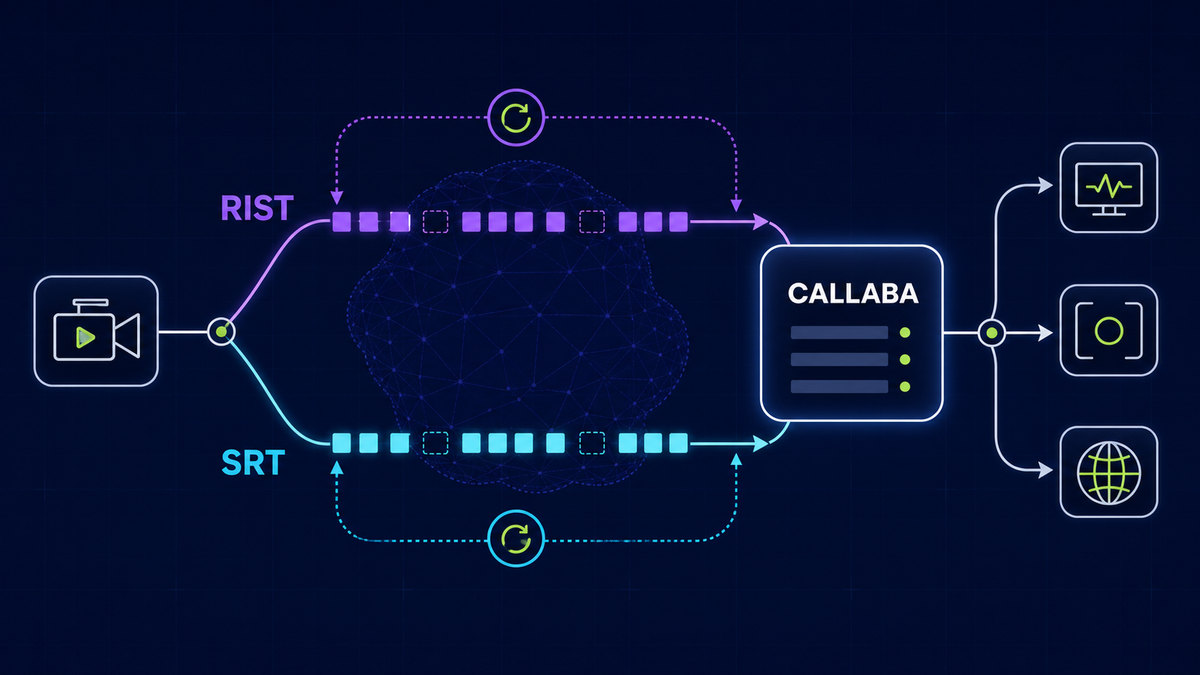
SRT is a transport protocol built for live media over unpredictable networks. In practical terms, it typically runs over UDP and adds mechanisms that matter for live contribution:
- Packet loss recovery so missing packets can be retransmitted in time for playback downstream
- Latency control so the workflow has a buffer window for recovery
- Encryption support for protected transport across public networks
- Connection modes that help with firewalls and NAT in real deployments
That combination is why operators and engineers use SRT for contribution rather than treating it as just another generic streaming acronym. Its job is to move media reliably from point A to point B before packaging, player delivery, or distribution.
One important detail: SRT reliability is not magic. It depends on having enough configured latency for retransmissions to complete. That is why latency tuning and network round-trip behavior matter in production. For tuning guidance, see how to find the right SRT latency and round-trip delay.
Why teams use SRT in production
Teams use SRT when clean private networks are not guaranteed and failure is expensive. Common examples include remote production, field contribution, venue uplinks, partner handoffs, cloud ingest, and inter-site transport over the public internet.
In those situations, SRT is valuable because it helps workflows stay usable when conditions are imperfect. It does not remove the need for monitoring, redundancy, or sane encoder settings, but it often gives a feed a better chance of arriving intact than older internet ingest methods.
Typical production reasons to choose SRT include:
- sending a contribution feed from OBS or an encoder into the cloud
- moving a live source between production sites
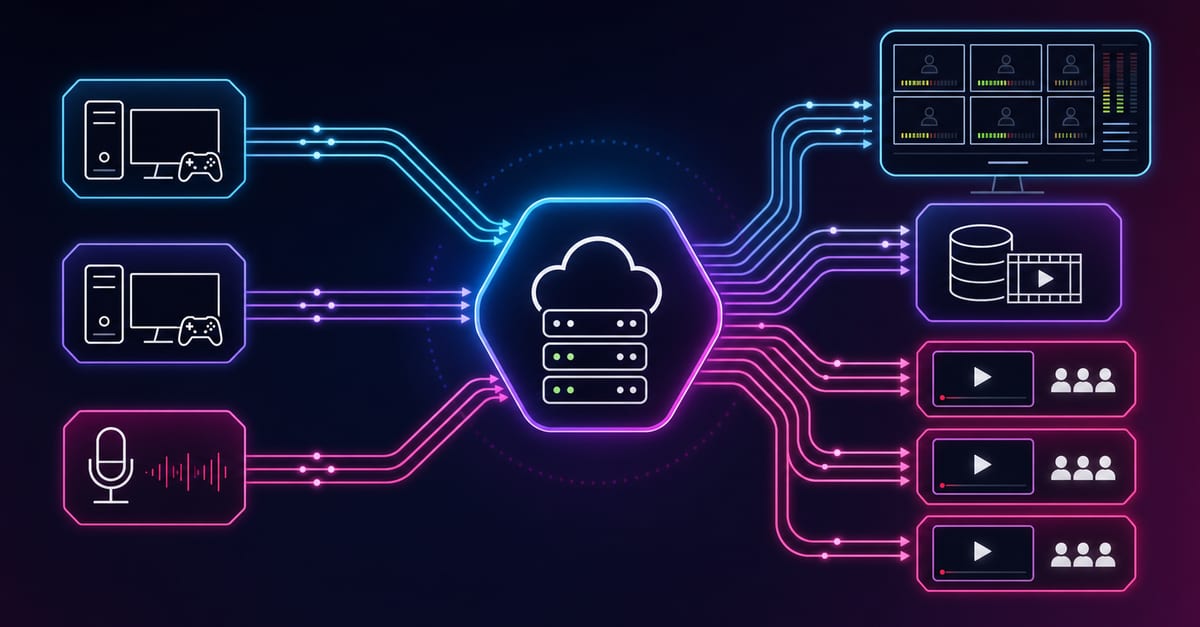
- feeding a transcoder, switcher, recorder, or restream platform
- replacing legacy RTMP ingest where network behavior is the bigger problem
See how SRT becomes browser playback
This is where many definition pages stop too early. Browsers do not usually play SRT directly. SRT is normally the contribution path into a platform or media workflow. After that, the stream is repackaged for viewer playback through browser-friendly surfaces such as HLS or a hosted web player.
A practical chain often looks like this:
Encoder or OBS -> SRT ingest -> processing/transcoding -> HLS or hosted player -> viewer browser
So when someone asks whether SRT is a playback format, the honest answer is usually no. SRT is what gets the live feed into the system; the audience usually watches through a browser-facing output. For implementation details, see web player docs and Video API.
What SRT is good at
SRT is especially good at jobs where live video must cross networks that are good enough for production, but not perfect enough to trust without recovery behavior.
- Contribution over public internet: remote cameras, venues, and field kits
- Cloud ingest: getting live feeds into a processing platform
- Inter-site transport: sending a stream between facilities or regions
- Relay and handoff: moving feeds between partners or systems
- Protected transport: when encryption support matters
It is less about direct consumer playback and more about getting the feed safely to the next operational step.
Where SRT fits compared with RTMP and browser playback
SRT, RTMP, and browser playback formats solve different problems. Treating them as interchangeable leads to bad design decisions.
| Option | Primary role | Where it fits best | Key limitation |
|---|---|---|---|
| SRT | Contribution and transport | Moving live feeds across unreliable networks | Not usually direct browser playback |
| RTMP | Legacy ingest | Simple encoder-to-platform workflows | Less robust on messy networks; aging role |
| HLS / hosted player | Viewer playback | Browsers and audience delivery | Not a contribution transport replacement |
If you are comparing ingest options, see SRT vs RTMP.
How SRT looks in a real Callaba workflow
A practical Callaba flow is straightforward:
- Send a live source from OBS or an encoder over SRT
- Receive it on an SRT endpoint
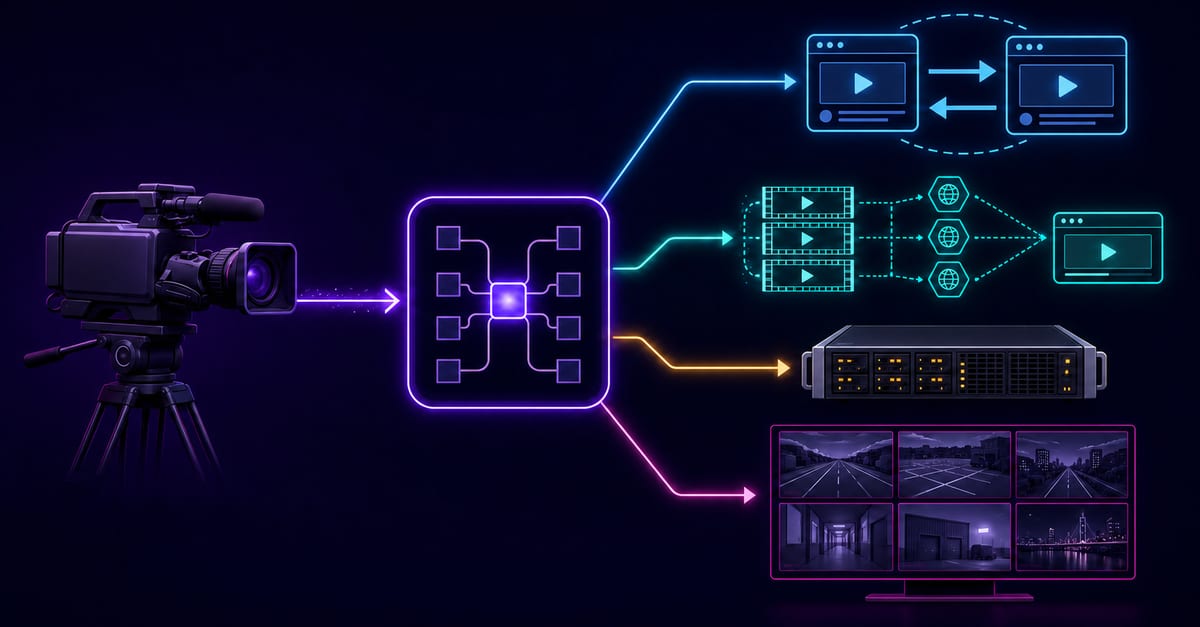
- Process, relay, or restream it as needed
- Publish browser-friendly playback for viewers
For example, an operator can send OBS to SRT using these OBS setup steps, receive an incoming feed with OBS receive guidance, configure endpoints through SRT server API docs, distribute outputs with restreams, and expose browser playback through web players. For broader distribution, multi-streaming can sit after ingest.
The important workflow idea is that SRT handles the contribution leg. Playback for end users happens after that leg, not inside the browser as raw SRT.
Common misconceptions
- "SRT is what viewers watch." Usually false. Viewers typically watch HLS or a hosted player, not SRT directly.
- "Reliable means zero packet loss problems." False. SRT improves resilience, but bad enough networks can still break live transport.
- "Low latency should always be set as low as possible." False. Too little latency can prevent effective packet recovery.
- "SRT replaces every other protocol." False. It is strong for contribution, not for every playback or interaction use case.
- "Encryption means the whole workflow is secure." False. SRT can protect the transport path, but broader platform security still matters.
Next steps
If your question started as "what does SRT stand for," the practical next question is usually "where should I use the SRT protocol in my workflow?" A good starting path is:
- read what SRT protocol is
- compare SRT vs RTMP
- tune latency with SRT latency guidance
- test sender setup in OBS
- plan the browser output with web player options
In one sentence: SRT stands for Secure Reliable Transport, and its real value is as a contribution protocol that gets live video into the system more reliably before browser playback takes over.